Genomics, nutrition, predictive modelling, and digital technologies
to support sustainable and climate-resilient livestock systems
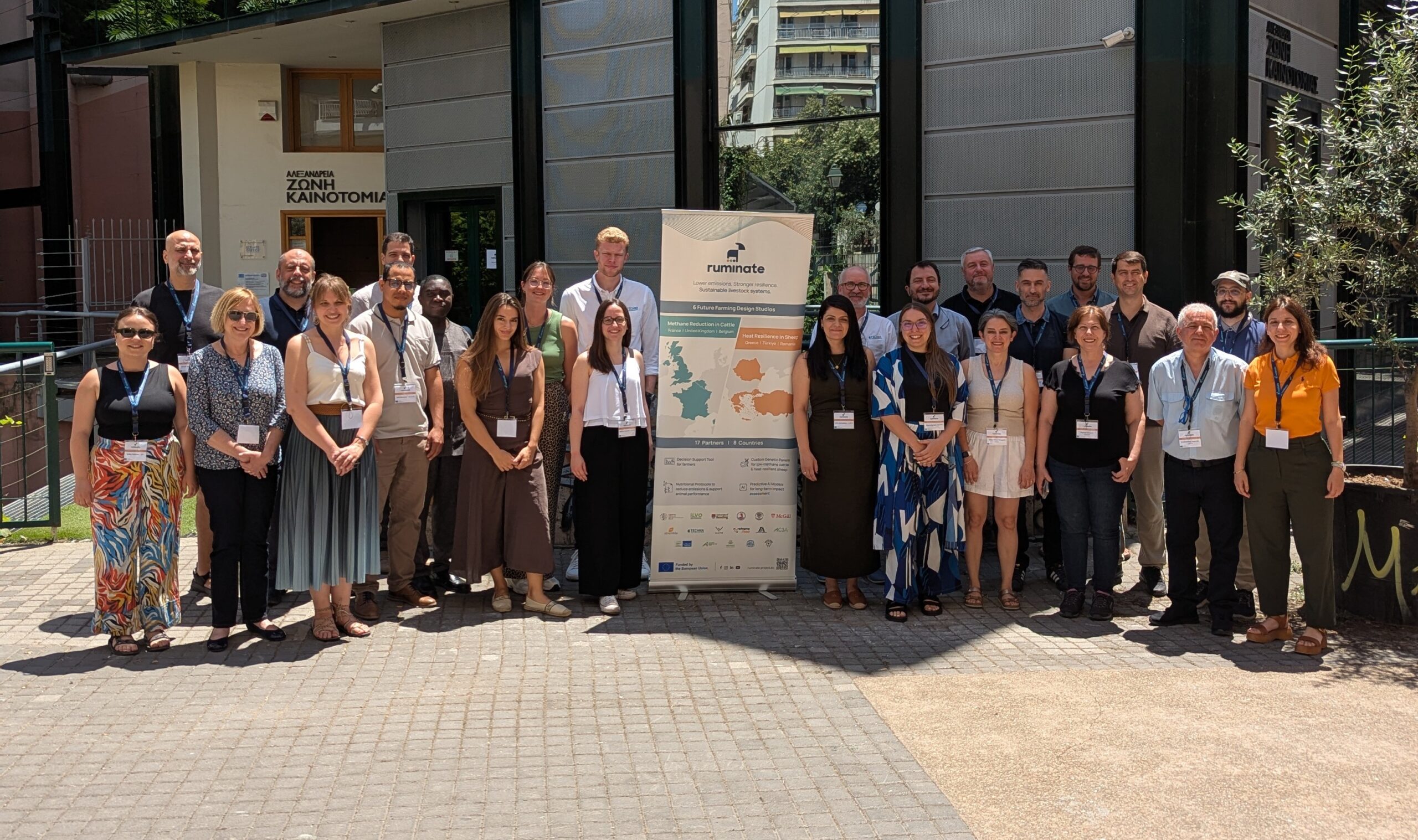
RUMINATE aims to address two major climate-related challenges in livestock farming: reducing methane emissions from cattle and enhancing heat stress resilience in sheep. Through a multi-actor approach, the project will develop scalable and cost-effective solutions combining genomics, nutrition, predictive modelling, and digital technologies to support sustainable and climate-resilient livestock systems. Central to the project is the Future Farming Design Studio (FFDS) network, which will engage stakeholders and support the testing and validation of solutions in real farming conditions. RUMINATE will deliver nutritional protocols, genetic panels, predictive models, and a user-friendly Decision Support Tool to help farmers improve environmental performance while maintaining productivity, animal welfare, and biodiversity.
The Methane Problem
Methane is a highly potent, short-lived greenhouse gas. Enteric fermentation in cattle represents the largest source of these emissions in agriculture. RUMINATE acts to uncover how host genetics and the rumen microbiome interact to allow the selection and breeding of lower-emitting animals
The Heat Stress Threat
Europe is warming faster than the global average. Prolonged heat waves can adversely affect pasture-dependent animals such as sheep, reducing milk production, reproductive performance, and animal welfare. RUMINATE develops genetic and nutritional strategies aimed at improving the resilience of sheep to climate-related stressors.
Our approach
RUMINATE follows a structured methodology that transforms cutting-edge research into practical, farm-ready solutions. Through the integration of genomics, nutrition, environmental data, and farmer-led innovation, the project creates scalable pathways to reduce methane emissions in dairy cattle and improve heat-stress resilience in dairy sheep.
Building the Foundations
Establishment of six Future Farming Design Studios (FFDSs) and creation of a harmonised open-science database.
Research, Trials and Discovery
Small-scale cattle and sheep trials, combined with advanced genomic and microbiome analyses, to identify effective strategies for methane reduction and heat-stress resilience.
Tool Development and Demonstration
Research findings are translated into nutritional protocols, genomic sequencing panels, management practices, and an AI-powered Decision Support Tool, which are validated in commercial livestock systems across six European countries.
Impact Assessment
Environmental and economic assessments, including Life Cycle Assessment (LCA) and marginal abatement cost analyses, quantify the long-term sustainability and adoption potential of RUMINATE innovations.
Education Support
Giving Food
Cancer Support
Save The Pets
Objectives
01
Objective
Investigation of genotype × environment interactions to advance low-emission and heat-resilient ruminant farming systems.
02
Collaboration
Development of accessible, low-cost tools, protocols, and applications to accelerate genetic gain and breeding progress, improving production efficiency and the sustainability of livestock farming.
03
Innovation
Development of farm-level management practices, technical guidelines, and policy recommendations to maximise impact in the livestock sector.
04
Innovation
Creation of Future Farming Design Studios for widespread adoption of sustainable and climate-resilient strategies